Social Media Platforms Are Not Public Spaces

I am sure that those of you who will take the time to read this spend a significant amount of time online. I am not taking much of a risk by saying this—a recent Pew Research Center study shows that 90% of Americans use the internet daily, and 4 in 10 even report using it almost constantly (Pew, 2026). It is also very likely that you frequently visit social media platforms.
I don’t know if you’ve ever wondered what these social media sites would look like if they were real, physical spaces. In a now-famous TED Talk, Eli Pariser, now co-director of the non-profit New_ Public, encourages us to think about the internet as a real public space, like a park or an office building. What was it designed for, and by whom? Who is there? Who owns the place, and who makes the rules?
When I teach my class on social media, I always start there. I ask my students to think creatively about these places in which we spend so much of our time and that shape not only what we think, but also who we are. Every year, I learn from each of their perspectives, but they all come to the same main conclusion that I most want them to remember: social media sites are not public spaces. These platforms are privately owned and, in order to remain free, derive value from the data we provide them. A few years ago, X ran an ad that read “the world’s town square.” Below it, a button prompted users to pay a fee to get a premium membership. What public park charges fees to sit on benches? Next time you think about social media, forget the utopian metaphor of the digital public square and think instead of a Las Vegas casino, with billboards on the walls and fees for everything you touch.
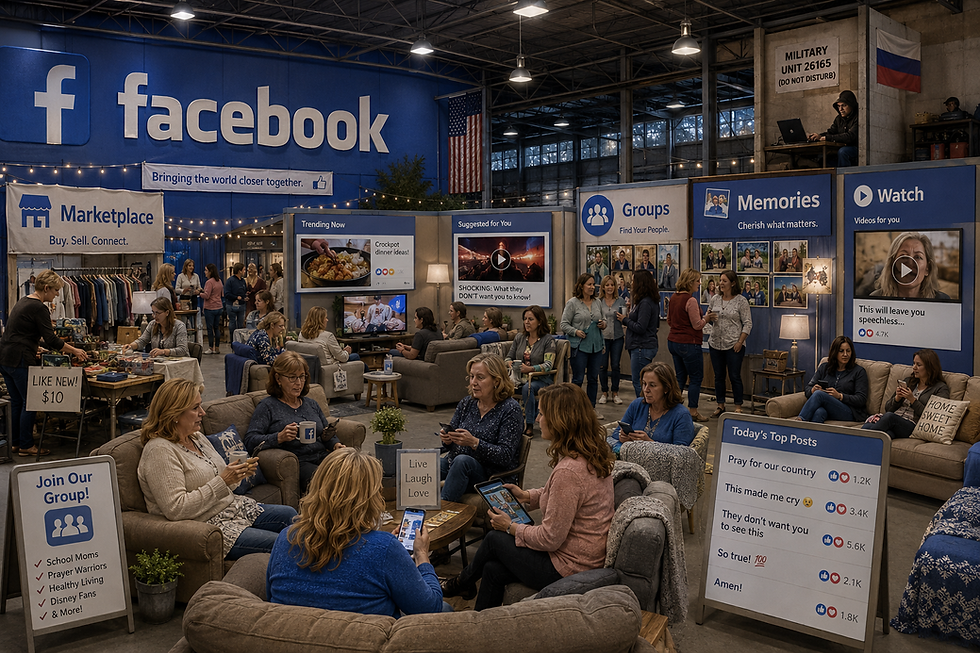
This year, although I am reluctant to use AI to generate images, I decided to ask ChatGPT to help me visualize some of the platforms my students use most. With a very detailed prompt, these are the images the machine came up with. Beyond how funny they are, I really do think they help us think differently about what it means to be online and about all the challenges that the contemporary internet poses to our mental health and our democracies. I encourage you to take a minute to think about the digital spaces you inhabit—I am sure you’ll learn something.


Comments